Author: admin

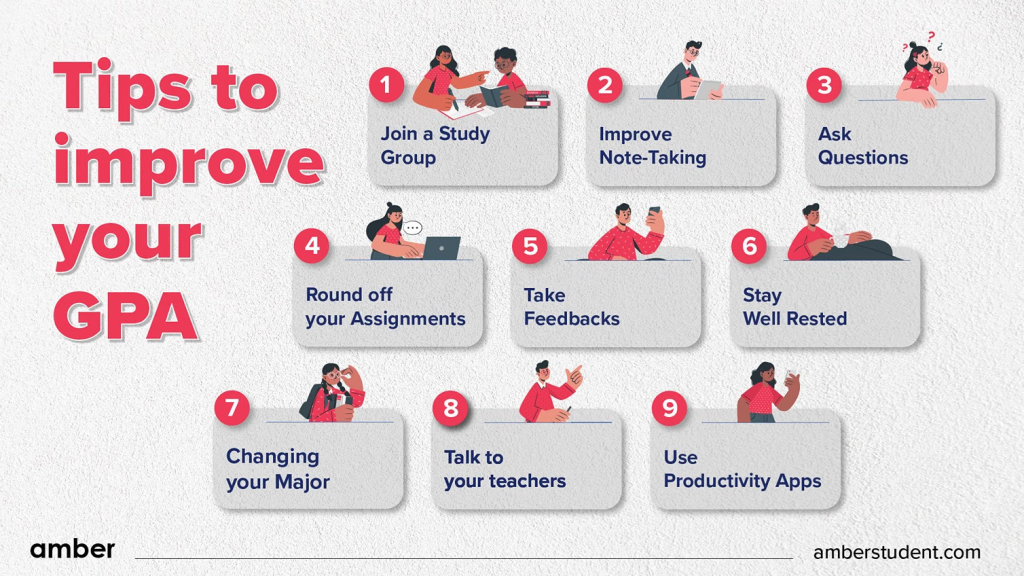
  • Realistic Ways to Improve GPA Without Overstudying

    When grades start slipping, most students panic and double their study hours. But more hours don’t always mean better results. In fact, overstudying can backfire—fatigue, burnout, and diminishing returns. The smarter path to improving your GPA is efficiency and self-management.

    Step one: identify the weak links. Look at past exams and assignments. Which subjects consistently lower your average? Focus your energy where it counts. A small bump in one low-grade subject can raise your entire GPA.

    Next, learn the grading system. Some courses weigh exams more, others projects or participation. Align your effort with weightage. Spending 20 hours on an assignment worth 5% of your grade makes no sense when an upcoming test is worth 40%.

    Use your professors as allies. Attend office hours, ask questions, seek feedback. Instructors respect effort and engagement, and they often give hints about what matters most. Plus, their feedback can pinpoint mistakes you didn’t notice.

    Study actively, not passively. Replace rereading with testing. Write summaries, quiz yourself, teach concepts aloud. These techniques strengthen recall far better than endless highlighting sessions.

    Organization helps too. Missed deadlines and forgotten tasks hurt GPA more than difficult content does. Use reminders, calendars, to-do apps—whatever prevents last-minute scrambles.

    Group study can help if done right. Choose classmates who stay focused, not those who chat more than work. Teaching and discussing material reinforces understanding and exposes gaps in your knowledge.

    And then, lifestyle. Grades reflect not just intellect but health. Sleep deprivation and poor diet kill focus. Exercise, even mild, improves cognitive performance. Your brain works best when your body’s cared for.

    Don’t chase perfection. Aim for consistent improvement. A steady climb each term adds up faster than one unsustainable sprint.

    Final Thought:
    Improving GPA isn’t about punishing yourself with more hours. It’s about studying smarter, managing time, and caring for your mind and body. Balance effort with rest, stay organized, and focus where it counts—your grades will follow naturally.
  • How to Track Academic Progress Throughout the Year

    Most students only check their performance when grades are released. By then, it’s too late to fix anything. Tracking your academic progress throughout the year keeps you proactive instead of reactive. It turns learning into a measurable process rather than a guessing game.

    Start with a baseline. At the beginning of the semester, assess your standing in each subject. What are your strengths? Where do you struggle? Write it down. Honest self-awareness gives direction.

    Next, set clear academic goals. “Do better” is too vague. Try “score 80% or above in calculus midterm” or “improve essay structure in English.” Numbers and specific outcomes make progress visible.

    Use a planner or spreadsheet to log grades from quizzes, tests, and assignments. Seeing them side by side reveals patterns—maybe you excel early but fade before finals, or maybe you always lose points on essays. Awareness leads to strategy.

    Don’t rely solely on grades. Include qualitative data: how confident you felt in class, how engaged you were during study sessions, how often you participated. Academic growth isn’t only numbers—it’s understanding and consistency.

    Schedule monthly check-ins. Review your progress, update goals, and adjust study time based on results. If one subject is slipping, allocate more hours there. This constant recalibration prevents last-minute chaos.

    Also track habits that affect academics: sleep, attendance, study hours, even stress levels. Sometimes poor performance isn’t about intelligence but burnout or poor scheduling. Keeping tabs on lifestyle factors gives you the full picture.

    Finally, celebrate small improvements. Going from 65% to 72% might not look dramatic, but it means something’s working. Recognizing progress keeps motivation alive.

    Final Thought:
    Tracking progress isn’t about pressure—it’s about clarity. When you see where you stand, you can course-correct early and study smarter. Think of it like navigation: constant tiny adjustments keep you on the right path long before you drift off course.

  • Science of Productivity — Study Like Top Students

    Some students seem effortlessly productive. They attend classes, keep up with notes, and still have time for life. It’s not luck; it’s science. Productivity isn’t about grinding endlessly—it’s about how you manage focus, energy, and habits.

    The brain works in pulses, not marathon stretches. Neuroscience shows that intense focus rarely lasts more than ninety minutes. After that, cognitive performance drops. That’s why top students use the Pomodoro or similar focus cycles: study 50 minutes, rest 10. Those short breaks let your brain reset before fatigue hits.

    Task batching is another hidden trick. Switching between subjects—chemistry, then history, then checking messages—kills productivity. Each switch costs mental energy. Group similar tasks: do all readings together, then all writing later. Your brain loves rhythm.

    There’s also the power of cues. If you always study at your desk with one specific playlist, your brain learns to associate that environment with focus. Over time, simply sitting there triggers concentration automatically. It’s classical conditioning but for studying.

    Sleep, again, is the secret weapon. Deep rest boosts memory consolidation. Without it, your productivity graph flatlines. Top students protect their sleep schedule fiercely because they know rested hours outperform exhausted ones.

    Nutrition and hydration aren’t small details either. The brain is 75% water—so dehydration, even mild, leads to sluggish thought. Balanced meals keep glucose levels steady, which means steadier focus. Basically, you can’t out-study biology.

    Another key: reflection. Productive students don’t just do—they review. At the end of each week, they ask, “What worked? What wasted time?” That habit turns mistakes into data. Instead of repeating bad study habits, they tweak and optimize constantly.

    Final Thought:
    Productivity isn’t magic—it’s biology plus self-awareness. Respect your focus limits, guard your rest, and track your own patterns. When you study in alignment with how your brain actually functions, “hard work” turns into smart, steady progress.

  • How to Make a Personalized Study Schedule That Works

    Every student swears they’ll follow a perfect study schedule “this time.” Then week two hits, deadlines explode, and that neat timetable falls apart. The truth is, most schedules fail because they’re copied from someone else’s system. A real, effective study plan has to match your energy, your habits, and your goals.

    Start by being brutally honest about your daily rhythm. Are you sharper in the morning or more focused at night? Everyone’s brain has its own peak hours, and trying to force productivity outside those hours is like swimming against the tide. If mornings are your strong suit, block deep work sessions before noon. If you’re a night owl, flip it.

    Next, know what you’re working toward. Don’t just write “study chemistry.” Write what exactly you’ll study—like “review two chapters of thermodynamics and solve five problems.” Specific goals turn vague time slots into real progress.

    Now map out your week. Use a planner, calendar app, or just paper—whatever feels comfortable. Start with fixed commitments: classes, labs, work shifts. Then fill in study blocks around them. Keep it realistic; three or four focused hours are better than pretending you’ll study ten. The schedule should serve you, not punish you.

    Break big goals into small, daily tasks. For instance, if you’ve got a 20-page paper due in ten days, plan two pages a day. Small wins build confidence and momentum. They also prevent that awful last-minute panic that wrecks sleep and sanity.

    Always include buffer zones. Life happens—surprise quizzes, social plans, bad moods. A flexible schedule is sustainable; a rigid one snaps. Keep one or two free blocks each week for catch-up or rest.

    Review your schedule weekly. Sunday evenings work well. Ask what went right, what didn’t, and adjust. Progress is trial and error, not perfection.

    Also, balance matters. You can’t fill every hour with academics. Include meals, workouts, downtime. When you see relaxation built in, guilt fades and you actually rest.

    Final Thought:
    A good study schedule isn’t about discipline alone—it’s about self-awareness. When your plan fits your real life, consistency becomes natural. The best system is the one you’ll actually follow, not the one that just looks organized on paper.