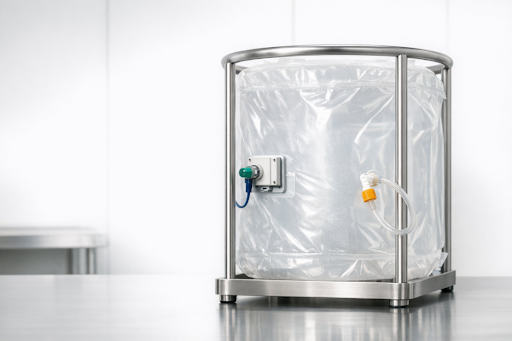
Researchers and industry partners are observing significant developments in large-scale bioprocess container design. With growth in biologics, cell therapies, and advanced manufacturing, engineering requirements for these containers are becoming increasingly rigorous. This article details specific technical advances in large-scale container design and discusses their role in enhancing reproducibility, safety, and efficiency in bioprocessing environments.
Large-scale bioprocess container technology is shaping academic research and industry collaborations as the need for precision and efficiency in workflow rises. The transfer of sensitive biological materials requires maintaining sterility, ensuring scalability, and reliable handling, particularly as operations scale up from laboratory to pilot production. Solutions such as a 100L bioprocess container directly address these technical challenges by supporting consistent process outcomes at scale. Ongoing improvements in design help facilities meet stringent operational standards and throughput targets, keeping pace with modern biomanufacturing and translational research requirements.
The need for advanced container design in bioprocessing
As biologic and cell therapy development expands, up-to-date bioprocess container design becomes essential. Research and pilot-scale manufacturing demand containers that facilitate scale-up, maintain product integrity, and support reliable reproducibility across multiple batches.
Container selection influences all aspects of throughput and risk management. As volumes rise, inconsistencies in mixing, temperature stability, or sampling can affect experimental data and process success. High-quality large-scale bioprocess container solutions are critical for securing uniformity and dependable results in both academic research and pre-commercial settings.
Understanding large-scale needs in practical contexts
Within research core facilities, handling volumes in the 50L to 500L range is standard during process development and technology transfer. These environments rely on containers that enable safe liquid handling, efficient sampling, and quick process adjustments while minimizing risks of contamination or operational interruptions.
Large-scale bioprocess containers are involved in steps such as media and buffer preparation, cell expansion, and harvest. Fulfilling requirements for sterility, mechanical robustness, and process adaptability ensures containers are suited to both automated and manual workflows, meeting practical demands in both academic and industrial settings.
Materials engineering and film innovations reshape performance
Material advancements for bioprocess container films target challenges including gas permeability, durability, and minimizing leachable substances. Improved barrier properties support product quality, while greater mechanical strength limits the potential for leaks or rupture during handling.
There is a focus on ensuring chemical compatibility to reduce extractables and leachables that could impact sensitive cell cultures or biologic formulations. Developments in film weldability and connector configurations provide operational flexibility, and closed system capabilities further reduce contamination risks during large-scale processing.
Revised container architectures and automation integration
Recent architectural changes center on port and tubing designs that reduce residual hold-up volume and facilitate cleaning. Features enabling effective drainage promote efficient product recovery and support compliance requirements in controlled manufacturing and research environments.
Modern containers are also designed to support temperature management, efficient mixing, and provide stable structures for safe handling. Integration with sensing technologies allows real-time monitoring and enables seamless connection to automated systems for weighing, filling, and media transfer, which are common in facilities that utilize large-scale bioprocess container solutions.
Quality, validation, and operational complexity in research
Standardization and thorough documentation are key to achieving batch-to-batch consistency in both research and manufacturing settings. Implementing quality risk assessment in early-stage development helps preemptively address potential issues related to container materials or changes in suppliers.
For university labs, adopting new container designs may involve revising training procedures, safety guidelines, and waste management practices. Teams often assess sustainability in conjunction with technical constraints, especially when scaling up or moving to advanced monitoring systems. Evaluating pilot-scale container formats includes consideration of reproducibility, secure operations, and broad suitability for ongoing research needs.
Research areas and future directions for bioprocess containers
Intelligent containers equipped with advanced sensors and data interfaces are emerging fields of research. Innovations in film chemistry to reduce extractable content are also under investigation as researchers study how material characteristics interact with biologic samples.
Academic and industry partnerships can drive the development of updated testing standards and benchmarking practices for bioprocess container performance. Ongoing advancements in container design remain fundamental to meeting the specific technical requirements of large-scale bioprocess applications.
Leave a Reply